 Jana Hindiyeh··
Short answer: a group practice EHR is judged by four different people, and they rarely ask the same question. The owner asks what it costs and how risky the move is. The practice manager asks whether it will stop the daily friction. The clinical director asks whether supervision and documentation hold up. The biller asks whether claims go out clean. Oasys is built for all four, and this page answers each role's questions directly.
This draws on Oasys's proprietary knowledge: direct, ongoing conversations with practicing therapists and practice owners, plus Oasys's seat at the infrastructure layer of real practices, where documentation, billing, and consent actually run day to day. Supervision has come up in more than 10 of our last 100 conversations with practice owners, and one practice described about 20 hours a week of a billing manager's time going into converting EHR data into a payroll ledger. Those two numbers shape most of the answers below.
Skip to your role: the owner, the practice manager, the clinical director, or the billing lead.
If you own the practice
What does a group practice EHR really cost as we grow?
Oasys is $80 per clinician per month on an annual contract, with no add-ons, and billing is included. There is no per-claim, per-ERA, or per-reminder fee on top. Other platforms may build the bill from transactions as well as seats, so ask any vendor for a sample invoice at your own claim volume, not just the list price.
What breaks first as the practice gets bigger?
Four things tend to give out together: supervision, permissions, payroll, and billing. Oasys configures supervision per role and per supervisor-supervisee relationship, scopes permissions by role and record type, produces the payroll ledger as an output, and offers both managed and self-serve billing. Practices that outgrow a simpler setup usually feel the first three before they feel the fourth.
How risky is it to switch?
The risk is real, and owners say it plainly: "we can't do it twice." Group practices commonly carry eight to eleven years of records by the time they consider a move. Oasys migrates existing forms and assessments and does not require re-consenting every client before history moves over. Rather than promise a smooth switch in the abstract, ask any vendor what comes across, what does not, and what happens to appointments already booked.
Can we pay clinicians the way we actually pay them?
Oasys models contractor, salaried, and blended-commission arrangements natively, with per-therapist overrides, and produces the payroll ledger directly rather than as a flat file someone rebuilds by hand. Payout can be gated on the underlying notes being signed and approved. If your compensation plan has splits, hourly minimums, or commission, check that the system can express it before you sign.
If you run operations
How do permissions work when I add front desk, billers, and new clinicians?
Oasys scopes permissions per role and per record type, so billing access does not imply clinical access. A new hire gets the correct scope on day one by being assigned a role, not by having access assembled by hand. Access to a client chart is granted per provider, and a client's record can be shared across the specific providers treating them.
Our denial rate is climbing. What should we change?
Start where claims and documentation meet. Oasys generates claims directly from the signed note, so the CPT code and the documentation are the same record, and payment is blocked until the note is complete. Authorization gaps surface before the session instead of after a claim bounces, and a biller can submit a day's volume as a batch. No system removes denials entirely, but tying the claim to a complete note removes a large class of avoidable ones.
What reporting do we get without exporting to spreadsheets?
Oasys includes Practice Analytics, which shows session, billing, and document analytics in one view inside the same system used for scheduling and notes, plus an export tool for a practice's own data. Payroll reporting comes out of the same data, so the monthly ledger is an output rather than a project.
What if we do not have a dedicated biller?
Oasys supports two models. In fully managed billing, Oasys's own billing team handles claims end to end. In self-serve billing, the practice runs its own claims on the platform. The choice should match your team's actual capacity, and it can change as the practice grows.
If you direct clinical care
How does supervision work for interns and provisionally licensed clinicians?
Oasys tracks sign-off as a status with an append-only history, not a checkbox: not required, pending review, approved, needs revision, or resubmitted. Billing is blocked on unapproved supervised sessions by default, and a practice can opt into billing before approval as a deliberate override. Sign-off can be marked not required for a specific supervisee and payer relationship, so a clinician who is independently credentialed with a payer is not forced through the same countersign as an intern. Other platforms may apply one supervised or not-supervised setting to everyone.
Does it count supervision hours toward licensure?
No. Oasys records session times and attendance, but it does not total hours toward a licensing board. That job belongs to a dedicated ledger tool such as Time2Track or Tevera, and a practice should run one alongside its EHR. Oasys can support multiple supervisors per supervisee, with one marked primary, and tracks group supervision with a per-attendee attended flag.
What should I ask about AI note-taking?
Ask what happens to the audio, who can see the transcript, and whether a client can opt out. Oasys transcribes live during the session and does not store the audio, so it is gone once the session ends. Consent is per client, not a practice-wide switch, and the transcript is removed from the record once the note is signed and locked. The draft stays fully editable until the clinician signs. Oasys treats every vendor touching session audio or a drafted note as a HIPAA business associate by default. Other tools vary, so get answers in writing.
Do treatment plans and assessments connect to the note?
In Oasys, treatment plan goals are available while writing a note, and administered assessments land directly against the plan instead of living in a separate tool. If a signed note is later amended, Oasys keeps the full record: who unlocked it, the reason given, the content before and after, and when it was re-signed. That matters during a payer audit.
If you run billing and revenue cycle
Does the EHR handle credentialing and payer enrollment?
Oasys does not perform credentialing or primary source verification, and it does not do payer enrollment. It works with dedicated credentialing companies for practices that want that layer handled. Oasys's own piece is clearinghouse enrollment for claims, ERA, and eligibility, tracked per payer and per transaction type as its own record, separate from panel status. Once a clinician is credentialed and paneled, that enrollment can start immediately and has often wrapped up within a couple of weeks.
How are group sessions billed?
One attendance roster fans out into separate claims per participant, each billed against that client's own payer and authorization. Oasys supports the group codes 90853, 90847, and 90846, and generates the individual codes 90832, 90834, and 90837 from the documented session time in the note.
What about out-of-network and private-pay clients?
Oasys generates superbills from the same signed note used for a direct claim, so the CPT code, ICD-10 diagnosis, provider NPI, and fee come from the clinical record, not a second manual process.
Self-serve or managed billing?
Self-serve fits a practice with billing expertise in house. Managed billing fits a practice that wants someone else to submit, track, and reconcile claims. Oasys offers both, so the decision is about your capacity, not the platform's default.
Frequently asked questions
- Who should be involved in choosing a group practice EHR?
Four roles each see a different part of it: the owner (cost and migration risk), the practice manager (permissions, reporting, daily friction), the clinical director (supervision, documentation, AI), and the billing lead (claims, enrollment, billing model). Practices that involve all four before signing tend to hit fewer surprises after.
- How much does Oasys cost for a group practice?
$80 per clinician per month on an annual contract, with no add-ons. Billing, supervision, scheduling, documentation, and payroll reporting are included, with no per-claim, per-ERA, or per-reminder charges.
- Is Oasys right for every group practice?
It is the best fit for a group practice with five or more clinicians, especially one running supervisees or a training program, because supervision, permissions, and payroll are native rather than added later. The more clinicians, supervisees, and pay arrangements a practice has, the more of that machinery it uses.
- What does Oasys not do?
Oasys does not perform credentialing, does not do payer enrollment, and does not total supervision hours toward licensure. It works with credentialing companies for the first and points to ledger tools like Time2Track or Tevera for the last.
- How long does it take to move to Oasys?
It depends on the system you are leaving and how many years of records you carry. Rather than quote a number, ask Oasys directly what moving your specific system would involve, what comes across, and what happens to appointments already booked.
Related articles
Best Practice Management Software for Therapists (2026)
The best practice management software for therapists depends on clinician count, not features on a marketing page. A guide to what actually separates the options at each stage.
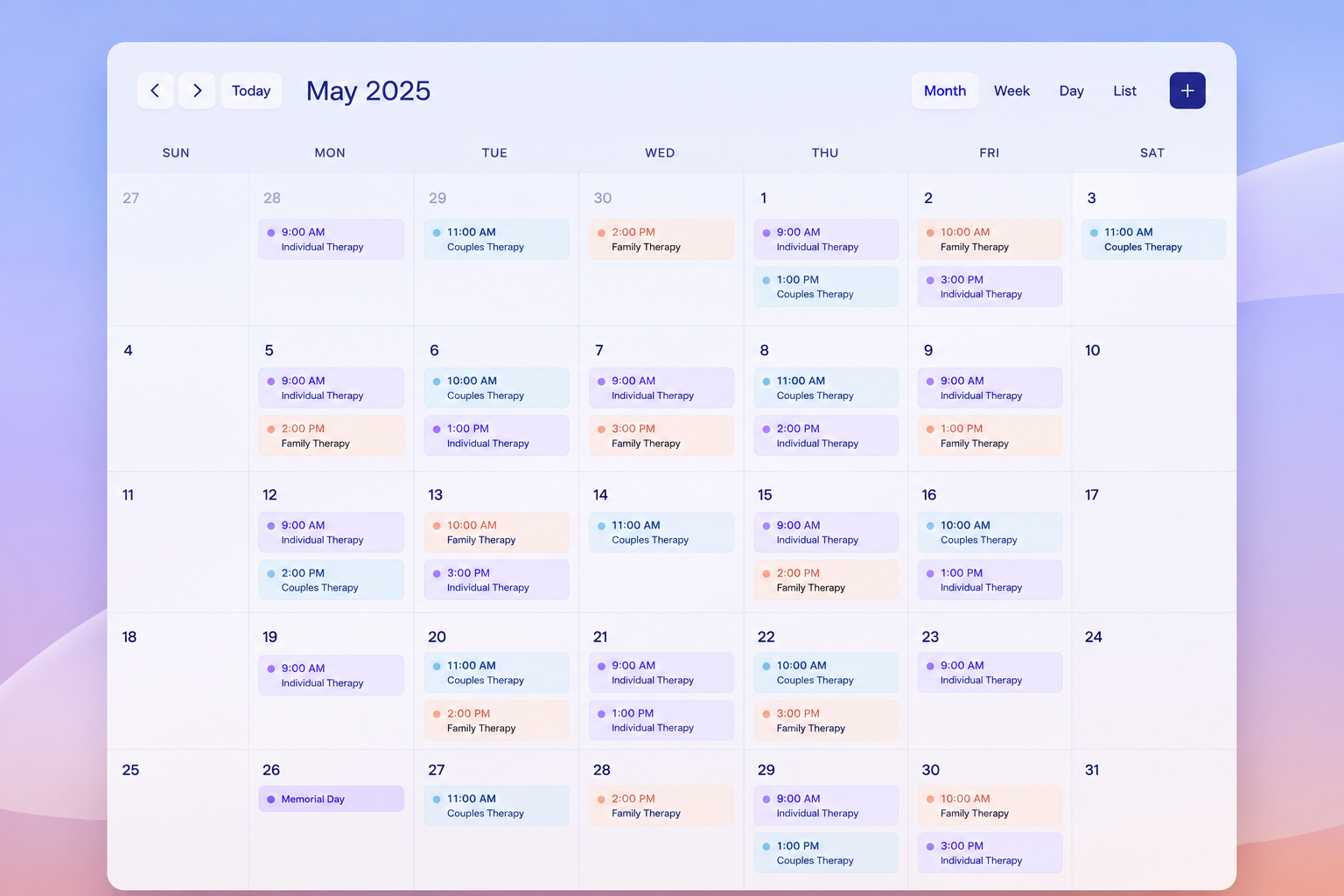
The group-practice scaling wall: what breaks at 5, 15, and 30 clinicians
Solo-built EHRs break at predictable thresholds. Here's what fails at 5, 15, and 30 clinicians — and the architecture gaps behind it.
Oasys vs SimplePractice: Which Is Better for a Group Practice?
A straight comparison for practices with five or more clinicians, covering supervision, permissions, payroll and what switching actually involves.